The Schlieffen Plan for Product Strategy: Defining the What over the How
PM DEPOT
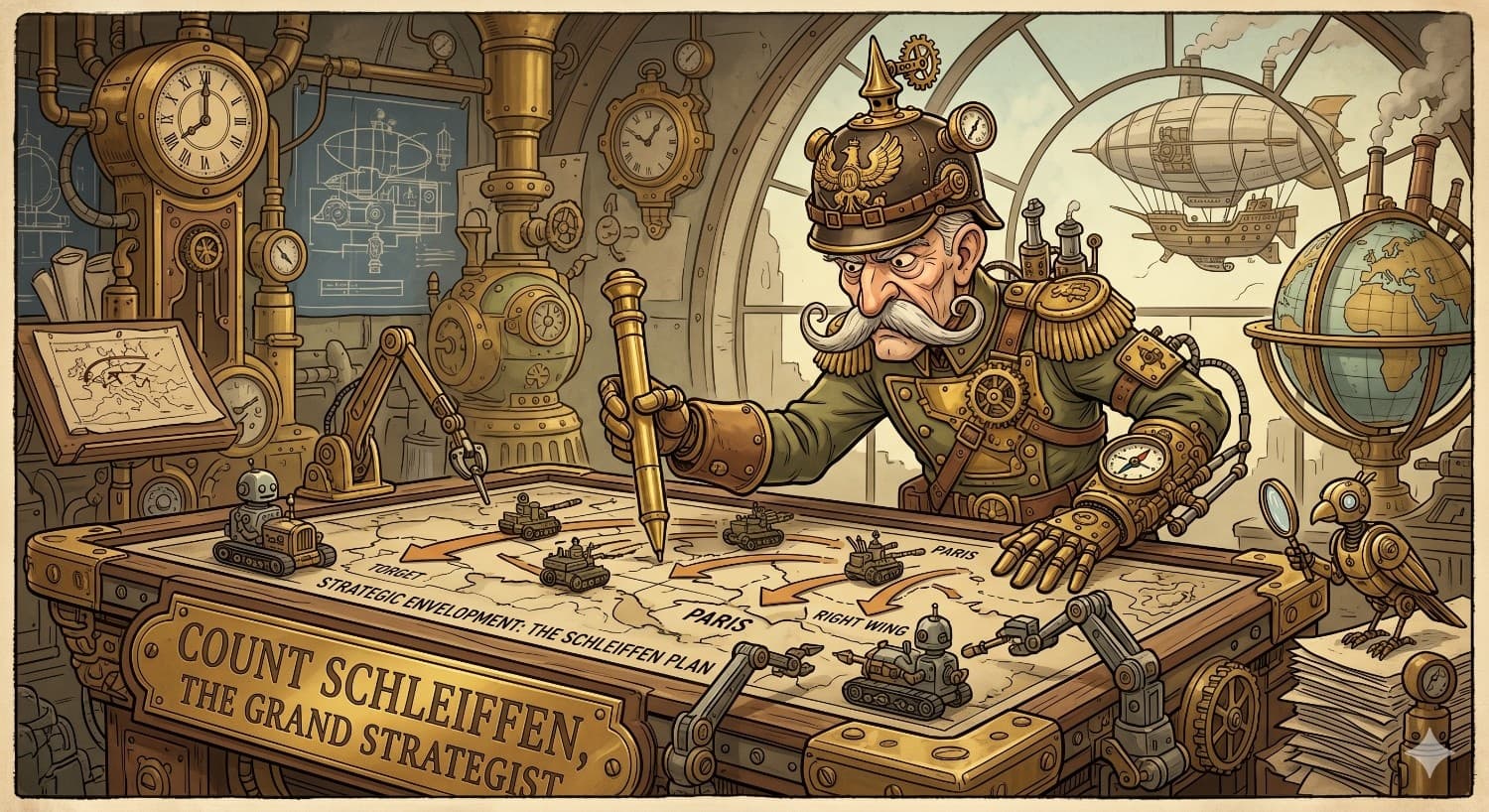
tl;dr: Successful product management relies on defining the objective while leaving the execution to the experts. By following Count Alfred von Schlieffen’s philosophy of strategic intent, product managers can empower designers and engineers to find the most effective solutions without being constrained by prescriptive instructions.
Count Alfred von Schlieffen was a man of singular focus. As the Chief of the German General Staff before the First World War, he spent his life obsessed with the concept of the grand strategy. He believed that a commander’s role was to define the ultimate objective with absolute clarity while allowing the machinery of the army to solve the tactical problems of the terrain. His approach offers a profound lesson for product managers today. The core of his philosophy mirrors a vital rule in product development: tell your team what the goal is, and let their expertise determine the method.
The Conflict of Customer Requirements
In the first sense, this principle applies to the relationship between the product manager and the customer. Users often approach a product manager with a list of specific features they want added. They attempt to dictate the implementation by telling you how the product should work. This is a natural human instinct because people like to envision solutions to their own frustrations.
However, when a product manager shifts the focus back to what the product needs to achieve for the user, the landscape changes. By identifying the underlying problem rather than the requested feature, you open up a vast array of possibilities for innovation. There is a fundamental gap between what a customer asks for and what the product actually requires to be successful. Customers are rarely in a position to understand the technical constraints or the broader market strategy, which is why the product manager must act as the strategic filter.
The Designer as a Strategic Ally
The second application of this principle involves the internal team. Many product managers fall into the trap of telling UI designers and engineers exactly how to build or design a feature. This is particularly prevalent in user interface design. Because many companies lack sufficient design resources, a product manager might feel forced to step in and dictate the interaction design.
This approach is counterproductive. The skill set required for high level product strategy is entirely different from the specialized discipline of interaction design. When a product manager dictates the "how" to a designer, they severely limit the value that a professional designer can provide. Designers are most effective when they are involved early in the process. They should be partners in understanding the target market and brainstorming solutions, rather than being treated as a service that simply skins a finished requirement document. A product manager who provides the designer with the latitude to explore alternative solutions will consistently produce more intuitive and successful products.
Empowering the Engineering Core
This same logic extends to the engineering department. Just as a product manager does not want a customer to dictate the technical architecture, an engineer does not want a product manager to spell out the implementation details. While the boundary between product and engineering is often clearer than the boundary with design, micromanagement in the technical requirements remains a common issue.
When you define the requirements in a way that allows engineers to use their ingenuity, you foster a sense of ownership and technical excellence. The goal is to create a collaborative environment where the product manager defines the destination and the team decides the best route to get there. By making your designers and engineers key parts of the strategic process, including them in customer visits and roadmap decisions, you leverage their full potential. Trusting their expertise is the only way to build a product that truly excels in a competitive market.
Put It Into Practice
How would you handle it in the room?
Step into the simulator — test your PM instincts against real stakeholder pressure. No slides. No safety net.
Enter the Simulator